

Table of Contents
Graphic design is more than just learning design tools. It’s about understanding how visuals communicate ideas, how design elements work together, and how to use them effectively. The program you choose will determine how quickly you learn essential skills, build your portfolio, and start your new career. Knowing what to look for can save you time and money.
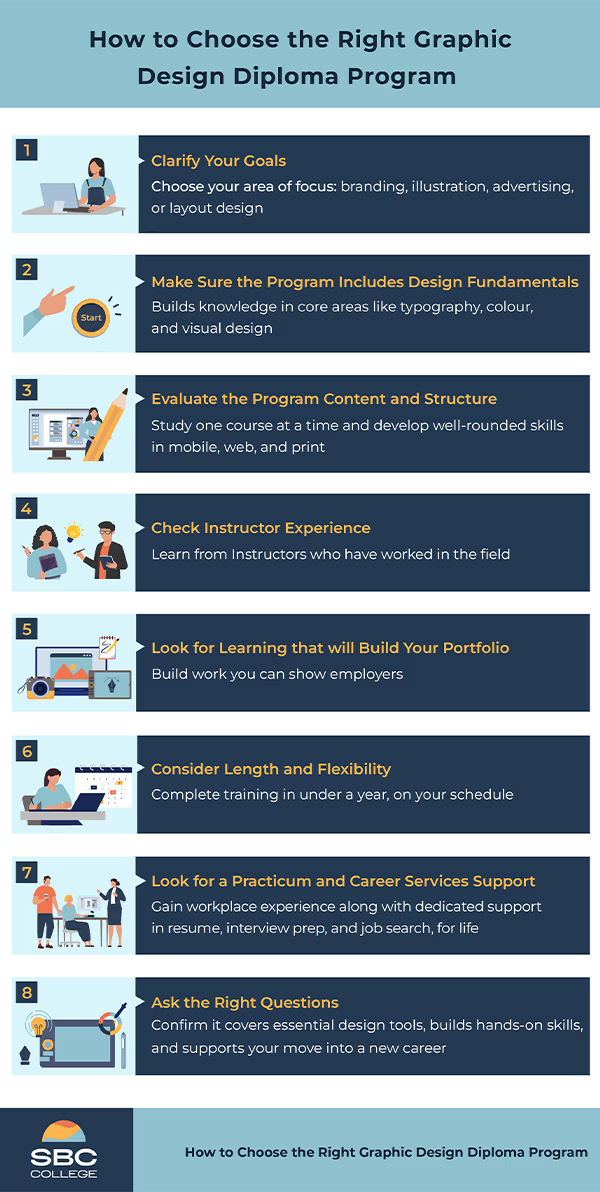
Here are eight steps to help you choose the right graphic design program.
Step 1: Clarify Your Career Goals
Before you dive in, ask yourself what you want out of a design career. Are you drawn to branding, illustration, advertising, or something totally different? Figuring out what excites you will make the rest of your choices way easier.
“Career opportunities in the field include graphic designer, illustrator, layout designer, and advertising designer. Graphic designers often work on branding and visual content across print and digital platforms. Illustrators focus on creating original visuals and concepts. Layout designers organize text and images for publications such as magazines and reports, while advertising designers create visuals for campaigns and promotions.
Before you enrol, make sure the program prepares you for the career you want.”
– Linda G., SBC College Graphic Design program instructor
Getting clear on your goals helps every other step fall into place, so start with that.
Step 2: Make Sure the Program Includes Design Fundamentals
A diploma program should help you start without prior experience or a degree. It should introduce core areas like visual design, typography, and colour, while also giving you hands-on practice with industry tools.
When comparing programs, look for one that builds your skills step by step and provides guidance from instructors as you progress. This kind of support helps you stay on track and build a portfolio that reflects your growth.
Step 3: Evaluate the Program Content and Structure
An effective Graphic Design diploma program will follow a clear, modular structure that builds your knowledge step by step. The curriculum should cover a range of design areas, such as print, web, mobile, and motion design, so you develop a well-rounded skill set. Review the skills taught in a graphic design diploma program to decide whether a program offers the depth and progression you need to prepare for your new career.
Step 4: Check Instructor Experience
Learning from industry-experienced design instructors will give you valuable insight into how graphic design works beyond the classroom.
“My instructor, Linda, brought her industry experience into every lesson. She walked us through how she handled client feedback, deadlines, and revisions in her own work. That made it easier to understand how design work is done in the real world.”
– Terrel L., SBC College Graphic Design Graduate
When you have instructors who have worked in the field, you get a better picture of what it’s like to work in the design industry and what’s expected day to day.
Step 5: Look for Learning that will Build Your Portfolio
A strong Graphic Design diploma program will give you the opportunity to create work samples, with projects that build on each other. In the best program, you will learn how to select and present your best work. When you focus on building a professional design portfolio, your training leads to job-ready results.
Step 6: Consider Program Length and Flexibility

Choose a Graphic Design diploma program that lets you complete your training in under a year, so you can enter the workforce quickly. The best program will also offer flexible online learning options that make it easier to balance your studies with other responsibilities.
Step 7: Look for a Practicum Opportunity and Career Services Support
The right Graphic Design diploma program will prepare you for a new career. As part of the program, it will include a practicum opportunity that allows you to apply what you’ve learned in a workplace setting. This experience helps you understand workplace expectations and gain practical insight into the field.
“Working on client projects during your practicum teaches you to design with purpose. You start thinking about what works for the audience, the brand, and the project’s goals. This hands-on experience provides strong examples you can talk about in interviews and showcase in your portfolio.”
– Linda G., SBC College Graphic Design program instructor.
During and even after your program, a dedicated Career Services support team will help with job search, resume creation, and interview prep.
“At SBC College, every student has access to Career Services, with one-on-one support and guidance on how to discuss their skills and experience in interviews. This support continues for life, so they can keep progressing in their careers.”
– Sam D., Career Services, SBC College
When reviewing programs, look for one that includes a practicum and dedicated Career Services support. This way, you graduate with hands-on experience, portfolio-ready work, and guidance to help you move into your new career.
Step 8: Ask These Questions Before You Enrol
Before choosing a graphic design diploma program, evaluate your options using a clear set of criteria:
- Does the program cover industry-standard tools like Adobe Photoshop, Illustrator, InDesign, and Premiere Pro?
- Are design fundamentals like typography, colour theory, and composition taught alongside software?
- Is there a practicum opportunity that gives you workplace experience?
- Is there a dedicated portfolio development course?
- Does the program offer flexible or online learning options?
- Can it be completed in under a year?
- What career services support does the program provide, and for how long?
If a program meets these criteria, you can feel confident in your choice.
Why Choose SBC College’s Graphic Design Diploma?
SBC College’s Graphic Design diploma program will prepare you for a career in graphic design without prior experience. The 50-week program follows a structured, modular format that builds your skills step by step, from foundational concepts to more advanced applications.
You’ll learn industry-standard tools like Adobe Photoshop, Illustrator, InDesign, and Premiere Pro while developing a strong understanding of design fundamentals. As you progress, you’ll create work for your portfolio and complete a practicum opportunity to gain workplace experience.
The Student Services team will provide academic guidance, while Career Services supports you with resume development, interview preparation, and job search strategies for life.
With flexible online learning options and a clear path from training to employment, SBC College provides a practical and focused way to enter the field.
Frequently Asked Questions (FAQs)
How long does a Graphic Design diploma take?
In less than a year, the best Graphic Design diploma program will build your skills step by step, cover design fundamentals and industry-standard tools, and include a practicum opportunity.
Is a Graphic Design diploma enough to get hired?
A Graphic Design diploma is enough when it covers design fundamentals and industry-standard tools, includes an opportunity to do a practicum and build a professional portfolio for you to get hired. The best program will also include Career Services support in job search strategy, resume creation, and interview prep.
What software should a good Graphic Design program teach?
A Graphic Design program should teach industry-standard tools like Adobe Photoshop, Illustrator, InDesign, and Premiere Pro. The best program will also teach design fundamentals and provide a practicum opportunity to apply them in real-world projects.
Will AI replace graphic designers?
AI has become part of the design process, but it cannot replace human creativity, judgment, and problem-solving. A graphic design program should teach design fundamentals and real-world application so you can create effective designs and use tools like AI to support your work.
Is a Graphic Design diploma still worth it in 2026?
Employers are looking for practical skills, a strong portfolio, and real-world experience that AI alone cannot provide. A good program should build your skills step by step, teach design fundamentals and industry-standard tools, and include hands-on experience so you’re prepared to start working in the field.
Can I take a Graphic Design diploma program online?
If a program uses a structured, modular format, offers hands-on projects, and provides student services support, online learning is an excellent option. Look for a program that helps you build practical skills and a portfolio while studying remotely.