


Table of Contents
Filing your taxes as a student can put money back in your pocket. Many students don’t realize how much they can receive, even with little or no income.
Your tuition, job, and personal situation all play a role. Taking a few simple steps can mean extra cash for groceries, rent, or everyday needs. Once you know what to look for, filing your return becomes a lot easier.
Here’s how to get started:
Do College Students Have to File Taxes in 2026?
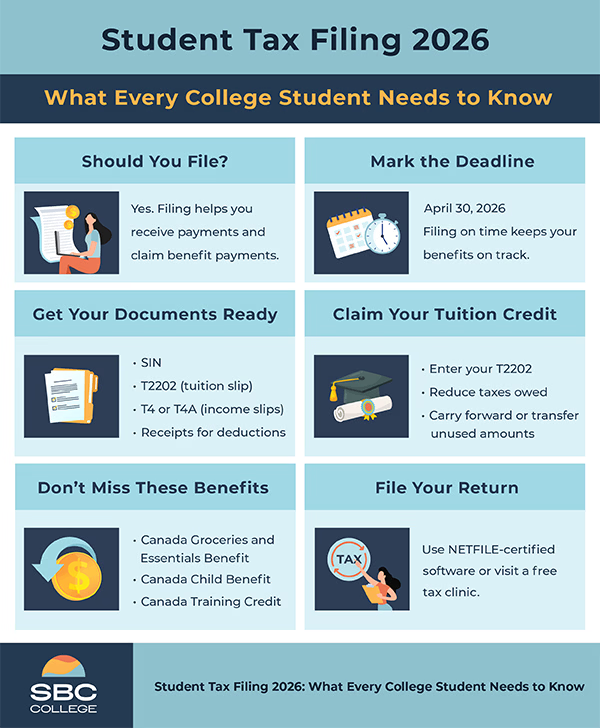
Yes. Students should file a tax return by April 30, 2026.
Even with little or no income, filing your taxes lets you get payments like the Canada Groceries and Essentials Benefit.
Filing a return also makes it possible to claim your tuition tax credit, with any unused amount available to carry forward or transfer.
Skipping your return means missing out on payments, refunds, and credits.
Know Your 2026 Tax Deadline
For the 2025 tax year, the filing deadline is April 30, 2026. Filing on time helps you receive tax benefit payments you’re eligible for without delays. It also creates a record of your financial history, which can be useful when you need proof of income for a mortgage or other large purchase.
The earlier you file, the sooner you receive your refund.
Gather Your Documents First

Having your documents ready helps you file quickly and report your information accurately. Here’s what you need:
Social Insurance Number (SIN)
Your SIN is your personal identification number for tax purposes. It links your information to your Canada Revenue Agency (CRA) account.
T2202 (tuition slip from your post-secondary institution)
Shows the tuition fees you paid during the year. You’ll find it in your student portal, usually by the end of February
At SBC College, your T2202 is available in SmartVault, a secure online document portal. You have received an email in your personal email address with steps to log in and download your form. All tax forms for the 2025 tax year have been issued.
T4 or T4A slips (income, including scholarships, or grants)
A T4 shows what you earned from a job and any deductions taken from your pay. You get it from your employer. A T4A shows scholarships, bursaries, or grants. You usually get it from your educational institution. These slips are sent by the end of February and are needed to report your income.
Any other income records
Side gigs, freelance work, and cash income all count. If you earned money through digital platforms like DoorDash, Upwork, or Etsy, you are required to report it.
Receipts for deductions
Student loan interest, moving expenses, and childcare could be eligible. These can lower what you owe or increase your refund.
Certain investment or savings contributions (e.g. RRSP)
If you’ve made contributions, like putting money into a Registered Retirement Savings Plan (RRSP), include them in your tax return. They can lower the tax you pay or increase your refund.
Most of these documents are issued by the end of February, so check your college portal, CRA account, and personal email.
How to Claim Your T2202 Tuition Tax Credit
Your T2202 can reduce what you owe. Here’s how to claim it:
- Download your T2202
Log in to your college portal and download your T2202. Check that your name, SIN, and tuition amount are correct before you use it. - Find the tuition section in your tax software
Look for “Schedule 11” or a section labeled “tuition amount.” - Enter your tuition amount
Enter the eligible tuition fees exactly as shown on your T2202. - Apply the credit
Once entered, the credit is calculated automatically and applied to your return. - Transfer or carry forward unused amounts
If you don’t use the full credit, you can transfer up to $5,000 of the current year’s amount to a parent, grandparent, spouse, or common-law partner. Any remaining balance stays on your record and can be used in future years.
Tip: Save your T2202 for at least six years in case the Canada Revenue Agency requests it.
What Else Can College Students Claim?
Tuition isn’t the only amount that affects your tax return. Other credits and deductions can also lower what you owe or increase your refund.
Student loan interest
Interest paid on certain government student loans qualifies as a non-refundable credit. If you don’t have any tax payable in the year you paid the interest, you can carry forward the unused amount and claim it in any of the next five years.
Moving expenses
If you moved at least 40 km closer to your college to attend, some moving costs may be deductible depending on your income situation.
Childcare expenses
If you’re studying while caring for a child, some childcare costs may be claimed.
Canada Training Credit (for eligible students)
Eligible taxpayers aged 26 to 65 can use this refundable credit toward tuition or fees for training and skill-building courses.
Canada Groceries and Essentials Benefit
Even with little or no income, filing your return makes you eligible for this payment if you qualify.
Taking a few minutes to review available deductions and credits can lower the tax you owe or increase your refund.
Need Help? Free CRA Tax Clinics for Students
If you’re unsure about filing your taxes on your own, free help is available. The Community Volunteer Income Tax Program offers support through clinics run by trained volunteers.
These clinics can help you complete and file your tax return at no cost if you have a simple tax situation. You may be able to access support in person, by phone, through video calls, or using a drop-off service.
Interested in a Career in Accounting, Tax, or Payroll?
If learning about taxes, credits, and financial records caught your interest, you should know that you could become a tax assistant in less than a year. The same process students follow to file taxes, review income, and apply credits is part of what professionals handle every day in accounting, tax, and payroll positions.
At SBC College, the Accounting, Tax & Payroll diploma program focuses on the practical skills and tools you’ll use every day. This includes financial accounting, payroll management, income tax preparation, and online bookkeeping. With flexible learning options, hands-on training, a practicum opportunity, and dedicated career support, you can prepare to enter the workforce as soon as you graduate.
This blog provides general information only. Tax rules may change. Verify all figures with the CRA or a registered tax professional before filing.
Frequently Asked Questions (FAQs)
Why should college students file taxes?
Filing your return lets you receive payments like the Canada Groceries and Essentials Benefit, claim tuition amounts, and get back any tax deducted from your income. You can file online using NETFILE-certified software or visit a free tax clinic for help.
What is a T2202 and where do SBC College students get it?
A T2202 is your tuition tax slip. It shows how much you paid in eligible tuition. Students at SBC College receive theirs through SmartVault in February.
What happens if I miss the April 30, 2026 tax deadline?
If you file after the deadline, you could face penalties and interest on any balance owing. Benefit payments can also be delayed until your return is processed.
Can a student get a tax benefit with no income?
Yes. Filing makes you eligible for credits like the Canada Groceries and Essentials Benefit and lets you carry forward tuition amounts for future use.
Can I transfer my tuition credit to my parents?
Yes. Up to $5,000 of the current year’s unused tuition amount can be transferred to a parent, grandparent, spouse, or common-law partner.
Are career college students at SBC eligible for the tuition tax credit?
Yes. Eligible tuition fees from SBC College are reported on the T2202 and can be used to claim the tuition tax credit.