

Table of Contents
Every specialist’s office, medical clinic, and hospital unit depends on skilled administrative professionals to keep operations running smoothly. From coordinating appointments to supporting patient care, medical office administrators are essential to the healthcare system.
Many people choose medical office administration for its stable employment opportunities, wide range of workplace settings, and the chance to contribute meaningfully to patient experiences.
Here’s a closer look at what medical office administration involves, the skills professionals use in the field, and how the right training prepares you for this career.
What Is Medical Office Administration?
Medical office administration is a set of coordination and administrative responsibilities that keep healthcare settings running smoothly.
Here’s how Medical Office Administrators make it happen:
What MOAs Do and Where They Work
MOA responsibilities include clinic coordination, patient support, and hospital administration:
- Patient Communication: Support patients daily, including scheduling and check-in through follow-up and rebookings.
- Scheduling: Manage patient bookings, physician schedules, and specialist referrals.
- Administrative Operations: Maintain hospital unit records, prepare medical documents and correspondence, and manage patient registration and health information.
- Billing and Insurance: Process medical billing, submit healthcare claims, and handle insurance and coverage documentation accurately.
- Clinical Support: Prepare examination areas, support diagnostic testing procedures, and follow infection control and healthcare safety standards.
MOAs can be found working in settings including:
- medical clinics
- specialist offices such as dental, optometry, and physiotherapy
- hospital units
- outpatient care centres
- government health agencies
- community health organizations
- nursing homes
- long-term care facilities
“Graduates that I have taught now work as medical receptionists, medical schedulers, and medical coordinators. They work in hospitals, dental and optometry offices, insurance companies, and wellness practices like chiropractic clinics.”
– Janice T., Medical Office Administration Instructor, SBC College
Why Medical Office Administration is a Good Career
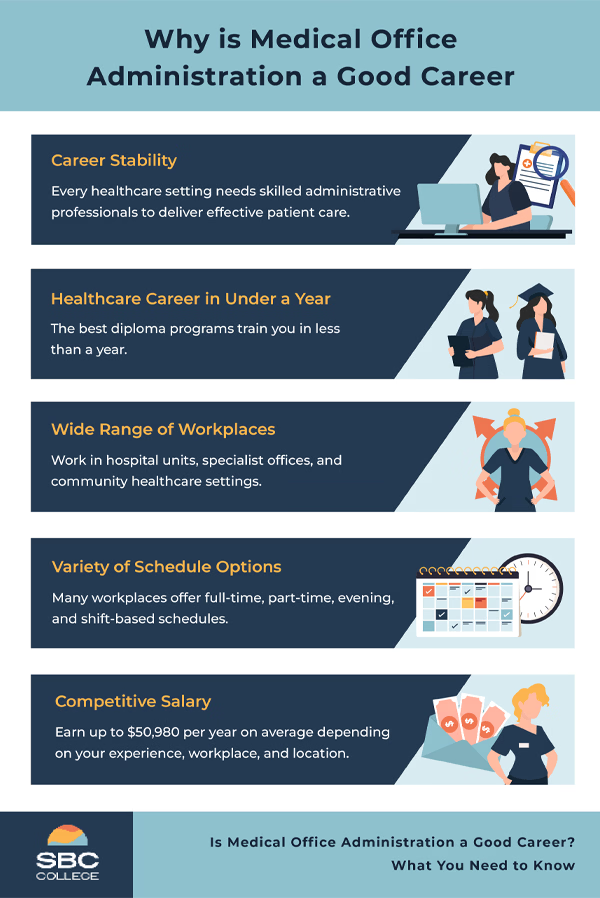
Medical office administration is a rewarding career because it allows you to support patients and healthcare teams. At the same time, it offers strong job demand, opportunities to work in a variety of healthcare settings, and the chance to build practical, transferable skills in a professional healthcare environment.
Stable Employment and Work-Life Balance
As populations grow, healthcare needs increase, and technology becomes more specialized, there is ongoing demand for skilled professionals who can support efficient healthcare operations. This demand means strong employment prospects across clinics, specialist offices, hospitals, and other healthcare environments.
Many workplaces offer scheduling options, including full-time, part-time, evening, and shift-based roles. For many professionals, this combination of predictability and scheduling variety contributes to better work-life balance.
Training in Under a Year
The best Medical Office Administration diploma programs provide you with practical skills and background knowledge for this new career within a year.
The skills you build through your training will include:
- technical skills like healthcare software, medical transcription, and workplace procedures,
- foundational knowledge like anatomy and medical terminology, and
- soft skills like professional written and spoken communication.
Leading programs will also provide a practicum opportunity in a healthcare environment to use your skills in a real-world environment.
Competitive Salary
You could earn up to $50,980 per year on average depending on your experience, workplace, and location.
Skills Needed for Medical Office Administration
Medical Office Administrators need to know the everyday procedures and computer applications used in medical office settings, build soft skills like communication and organization, and have foundational knowledge in healthcare. This includes:
Technical Skills: Software, Transcription, and Procedures
Healthcare Software
Proficiency with Electronic Medical Records (EMR) systems for scheduling, billing, processing healthcare insurance claims, and maintaining accurate patient records.
Medical Transcription
Accurately transcribe dictated or written medical information into patient records and healthcare documents.
Workplace Procedures
You will need to understand medical office procedures, including patient registration, appointment scheduling, and health information management. You may also handle clinical procedures such as diagnostic testing and infection control. In larger facilities, familiarity with health unit processes like admissions, discharges, patient transfers, and order entry is important.
Soft Skills: Communication and Organization
Strong communication and organizational skills help you manage busy healthcare environments, maintain accurate records, and communicate professionally with patients and medical staff. Training should include common communication and organization platforms like Microsoft Outlook, Word, and Excel.
Foundational Medical Knowledge
Communicating effectively with medical professionals and patients requires foundational understanding of anatomy, medical terminology, and pharmacology.
Education and Training Requirements

To become a medical office assistant, you’ll need to complete a diploma program that trains you in medical office systems and procedures, foundational medical knowledge, and patient management.
An effective program will provide hands-on training, as well as a practicum opportunity to use your skills in a real-world healthcare workplace.
“At SBC College, students build the practical skills used every day in medical office settings. Training covers medical terminology, anatomy, patient scheduling, billing, medical transcription, and clinical procedures so students gain experience with both the administrative and healthcare responsibilities of the career.”
– Janice T., Medical Office Administration instructor, SBC College
SBC College Medical Office Administration Diploma Program
SBC College’s Medical Office Administration diploma program is developed to prepare you for the day-to-day responsibilities of healthcare administration settings through career-focused training, practical experience, and strong student support. Here’s what that looks like:
Career-Ready in Under a Year
The Medical Office Administration diploma program trains you for healthcare administration careers in less than a year. Throughout the program, you’ll develop the skills to support patient scheduling, manage medical documentation, and assist with both medical office operations and clinical procedures.
Real-World Experience Before You Graduate
The program includes a practicum opportunity in a real-world healthcare workplace. Here you will apply your training, gain valuable workplace experience, and build professional connections before you even graduate.
Industry-Experienced Instructors
Learn from instructors with years of experience working in the field. Their insights help you understand how healthcare offices function and what employers expect from new graduates.
Support Throughout Your Training
Support begins with live onboarding and the Becoming a Master Student course, where you build strong study habits and set your academic goals. Throughout your program, you’ll have access to academic guidance, wellness referrals, and Career Services.
Study on Your Schedule
SBC College’s modular format allows you to study one course at a time, with online learning options that make it easier to balance school with work and personal responsibilities.
Lifetime Access to Career Services
The Career Services team provides support in job search strategies, resume building, and practise interviews. Work with them as soon as you graduate, and as you progress through your career.
Frequently Asked Questions
Is medical office administration in demand?
Yes. Medical office administration continues to be in demand because of an aging population, increasing healthcare needs and reliance on Electronic Medical Records (EMR).
What is the average salary for a medical office administrator?
Medical office administrators earn on average as much as $50,980 per year, depending on experience, workplace, and location.
How long does it take to become a medical office administrator?
The best Medical Office Administration diploma program provides hands-on skills, foundational knowledge, and real-world experience in less than a year.
Is medical office administration stressful?
While healthcare environments can be busy, the right training will prepare you for the expectations of the field. With the Medical Office Administration diploma, you’ll be able to effectively handle medical office procedures, software, and patient care.
Can medical office administrators work remotely?
Yes. Some medical office administration responsibilities, such as scheduling, billing, insurance processing, and electronic record management, can be done remotely depending on the workplace and position.
Can you work as a medical office administrator without experience?
Top Medical Office Administration diploma programs provide a practicum opportunity, where you will build real-world experience while at school. This practical experience can prepare you for healthcare environments before graduation and make you more competitive to employers.