


Table of Contents
Hospitality management covers much more than hotel operations. It includes the people, services, and business functions that keep hotels, resorts, restaurants, event venues, and other hospitality businesses operating.
Hospitality management brings together team leadership, daily operations, customer service, and business skills. Depending on your interests, you could manage operations, coordinate events, oversee food and beverage services, or support sales and marketing.
Let’s explore popular hospitality management roles, the career outlook, and how SBC College prepares you for the field.
Events and Conferences Manager
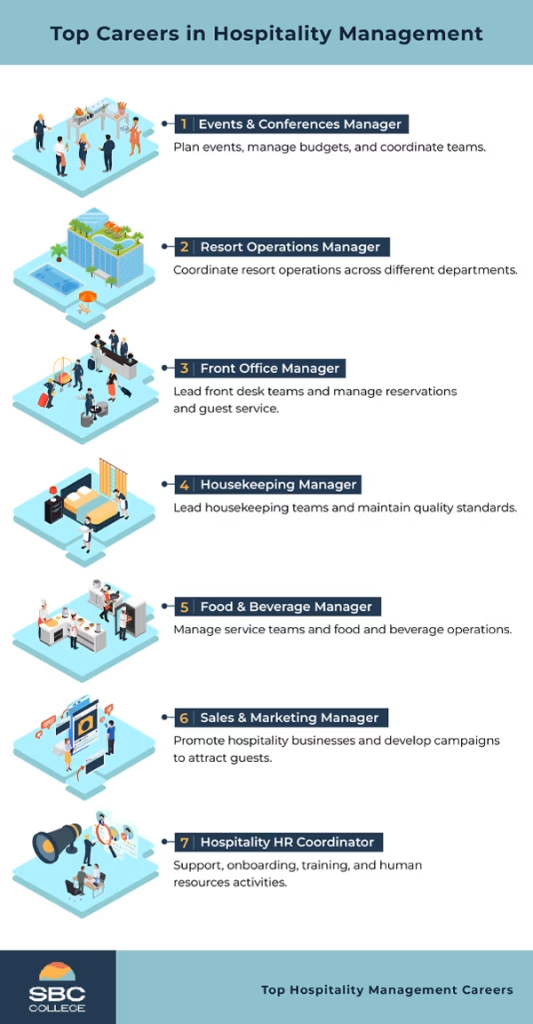
Events and conferences require careful planning and coordination. Events and Conferences Managers plan and coordinate events from the early planning stages through the event itself. You’ll coordinate vendors, manage budgets, oversee event staff, and deal with last-minute changes and problems as they arise.
Key Skills
- Leadership and Team Supervision
- Hospitality Accounting
- Hospitality Sales and Marketing
Common Workplaces
- Hotels and resorts
- Conference and convention centres
- Event planning companies
- Wedding and banquet venues
- Corporate organizations
Resort Operations Manager
Resort operations involve several departments working together each day. Managers help coordinate those departments and keep operations on track.
As a Resort Operations Manager, you may work across areas such as front office operations, housekeeping, food and beverage, facilities and guest services. You help coordinate teams and departments, so the different parts of the resort work together.
This role can include supervising staff, addressing operational issues, coordinating resources and monitoring service across the property.
Key Skills
- Leadership and Team Supervision
- Hospitality Facilities Management
- Hospitality Sales and Marketing
Common Workplaces
- Resorts
- Hotels
- Vacation properties
- Spa and wellness resorts
Front Office Manager
The front office is responsible for much of a guest’s experience from reservation and arrival to checkout. A Front Office Manager oversees the people and the processes behind those operations.
Your work combines guest service, administration, technology, and team leadership. You’ll lead the front desk team, oversee reservations and check-ins. You also respond to guest concerns and help manage front office procedures, including guest accounts and checkouts.
Key Skills
- Front Office Operations
- Hospitality Technology
- Hospitality Accounting
- Leadership and Team Supervision
Common Workplaces
- Hotels
- Resorts
- Boutique hotels
- Conference hotels
- Extended-stay hotels
Housekeeping Manager
Housekeeping is a major hotel operation, with responsibility for maintaining guest rooms and other areas of a property.
As a Housekeeping Manager, you’ll lead housekeeping teams, monitor quality standards, manage supplies, and coordinate the day-to-day work of the housekeeping department.
Key Skills
- Housekeeping Management
- Leadership and Team Supervision
- Security and Loss Prevention Management
Common Workplaces
- Hotels
- Resorts
- Boutique hotels
- Vacation properties
- Extended-stay hotels
Food and Beverage Manager
From restaurants and cafés to banquet halls and catering services, food and beverage operations are an important part of hospitality.
As a Food and Beverage Manager, you’ll supervise service teams and coordinate daily operations. You also monitor service standards and help manage food and beverage service and operations.
Key Skills
- Food and Beverage Operations
- Leadership and Team Supervision
- Hospitality Technology
Common Workplaces
- Restaurants
- Hotels and resorts
- Banquet and event venues
- Catering companies
- Cafés and bars
Sales and Marketing Manager
Hospitality businesses need to attract guests, groups, and customers. Sales and marketing managers help build that demand.
As a Sales and Marketing Manager, you’ll develop campaigns and promote hotels, restaurants, and event venues. You will also work with different audiences and support sales activities.
Depending on the business, that can include selling to different target markets and promoting rooms, events, dining or other hospitality services.
Key Skills
- Hospitality Sales and Marketing
- Leadership and Team Supervision
- Hospitality Technology
Common Workplaces
- Hotels and resorts
- Restaurants
- Event venues
- Tourism organizations
- Destination marketing organizations
Hospitality Human Resources Coordinator

A strong team is one of the greatest assets for hospitality businesses. Human resources teams support employees throughout their time with the organization.
Hospitality businesses can employ people across many different departments, making human resources an important part of their operations.
As a Hospitality Human Resources Coordinator, you’ll support employee management, coordinate onboarding and training, and work with human resources practices and employment requirements.
Key Skills
- Hospitality Human Resources
- Leadership and Team Supervision
Common Workplaces
- Hotels and resorts
- Restaurants
- Hospitality management companies
- Event venues
- Corporate hospitality offices
How to Break into Hospitality Management (No Experience Needed)
You don’t need hospitality experience to start preparing for a hospitality career. That’s what the educational program is for.
For someone new to the field, training provides a foundation in hospitality operations and business needed to pursue entry-level opportunities and work toward management positions.
At SBC College, the Hospitality Management diploma program takes 47 weeks to complete. Students study front office, housekeeping, and food and beverage management. They also learn about hospitality accounting, human resources, sales and marketing, facilities management, leadership, security and loss prevention, and technology.
The program also prepares you to complete the American Hotel & Lodging Educational Institute (AHLEI) exams to pursue internationally recognized certification.
“At SBC College, students spend 47 weeks learning different areas of hospitality management, from guest service and daily operations to leadership, finance, and sales. By graduation, they can make informed decisions, lead teams, and contribute to successful hospitality operations.”
– Valerie T., Assistant Education Manager at SBC College
Hospitality Management Job Outlook and Salaries
Hospitality includes a wide range of occupations, so there isn’t one job outlook or salary that applies to every hospitality management career. Employment prospects and wages vary depending on the position, location, employer and level of experience.
In Vancouver, for example, Government of Canada Job Bank data forecasts employment growth through 2027 for both accommodation service managers – including hotel and resort managers – and restaurant and food service managers. Opportunities extend across Canada, with demand for hospitality managers driven by employment growth, tourism and the need to replace retiring workers.
“Hospitality looks different than it did even a few years ago. Guests expect greater convenience and personalized service, technology plays a bigger role in daily operations, and finding and keeping good employees remains a priority. All of this changes what businesses need from the people managing them.”
– Valerie T., Assistant Education Manager at SBC College
These shifts are creating new possibilities for careers in hospitality management. Hospitality management salaries vary by role, location, experience, and employer. Hospitality managers can earn up to $78,000 per year, depending on these factors.
Why Choose SBC College’s Hospitality Management Diploma
Whether you’re interested in managing hotels, planning events, leading food service teams, or working in hospitality sales, the right training can prepare you for these roles. SBC College’s Hospitality Management diploma program builds skills for different areas of the hospitality industry.
Learn the Skills Hospitality Employers Look For
Build your skills through courses in:
- Hospitality Operations
- Front office and Housekeeping Management
- Food and Beverage Operations
- Hospitality Accounting
- Leadership and Team Supervision
- Hospitality Sales and Marketing
- Hospitality Technology
- Hospitality Human Resources
- Facilities Management
- Security and Loss Preventation
Whether you’re interested in managing hotels, planning events, leading food service teams, or working in hospitality sales, the right training can prepare you for these roles. SBC College’s Hospitality Management diploma program builds skills for different areas of the hospitality industry.
Prepare for Industry-Recognized Certifications
The program prepares you to complete certification exams through the American Hotel & Lodging Educational Institute (AHLEI). These internationally recognized certifications strengthen your credentials and help you stand out to employers, in addition to your SBC Hospitality Management diploma.
Learn from Hospitality Professionals
Instructors with hospitality industry experience bring practical knowledge into the classroom. They share workplace expectations and industry standards throughout your training.
Support During Your Studies
Live onboarding helps you get started with your studies. The Academic Prep course builds study habits and time management skills.
Student Services provide academic support, wellness referrals, and other resources.
Career Support for Life
Career Services provides support with resumes, conduct mock interviews, and job searches during your studies and after graduation.
Frequently Asked Questions
How long does a hospitality management diploma take?
At SBC College, the Hospitality Management diploma program takes 47 weeks to complete. During that time, you’ll study the operational and business areas involved in hospitality management, including front office, housekeeping, food and beverage, accounting, leadership, sales and marketing, and technology.
If you’re looking for shorter training, SBC College also offers certificate programs in Hospitality Fundamentals and Hospitality Sales & Marketing.
What skills do you need for hospitality management?
Hospitality managers need leadership, business, operational, and technology skills. The skills you use depend on your role. These skills include:
- Leadership and Team Supervision
- Food and Beverage Operations
- Front Office Management
- Housekeeping Management
- Hospitality Technology
- Hospitality Accounting
- Hospitality Sales and Marketing
- Security & Loss Prevention Management
These skills help hospitality managers oversee daily operations, support employees, manage resources and contribute to the operation of hospitality businesses.
What is hospitality management?
Hospitality management involves overseeing the people, services, and operations that keep hospitality businesses running. Depending on the role, you could spend your day leading employees, managing front office or food service operations, solving facility issues, or supporting sales and marketing.
What degree do you need for hospitality management?
You don’t need a university degree to pursue a career in hospitality management. Education requirements vary by position and employer, and a hospitality management diploma can provide training for a range of roles in the industry.
What’s the difference between hotel management and hospitality management?
Hotel management focuses specifically on operating hotels and resorts. This includes the front office, housekeeping, food and beverage, and guest services. Hospitality management is broader and can include hotels, restaurants, event venues, catering businesses, tourism, and other guest service organizations.