

Table of Contents
Every payday, employees count on receiving the correct amount. Businesses rely on accurate financial records to make decisions, manage expenses, and meet their tax and reporting obligations. Accounting and payroll administrators make both possible.
These professionals maintain financial records, process payments and payroll, and support the administrative work that keeps organizations of all types and sizes running smoothly. Their work requires accuracy, organization, problem-solving, and specialized accounting and payroll skills.
In this article, we’ll explore the responsibilities of accounting and payroll administrators, and the knowledge and skills employers value.
What Is an Accounting and Payroll Administrator?

An accounting and payroll administrator maintains accurate financial records and processes employee payments. The role combines bookkeeping, financial accounting, payroll processing, and human resources.
The responsibilities of an accounting and payroll administrator vary by workplace, often including:
- Calculating wages, including taxes and deductions
- Reconciling invoices, bank statements, revenue, and expenses
- Working with human resources on employee compensation and benefits
- Preparing payroll remittances for the Canada Revenue Agency (CRA)
- Creating reports for leadership
- Following federal and provincial tax and employment legislation
- Updating financial and employee records
“Accounting and payroll administrators play an important role in keeping nearly every organization running smoothly by providing reliable financial information, supporting management decisions, and ensuring organizations meet their regulatory responsibilities.
Their knowledge and skills are also valuable across a variety of industries, including banking, investments, and business management, making this a versatile career path.”
– Larry G, Accounting and Payroll Administration Instructor, SBC College
Why Become an Accounting and Payroll Administrator?

Every organization needs accurate financial records and reliable payroll processing. This creates opportunities for accounting and payroll administrators in almost every industry, from the public sector to entertainment.
“When accounting and payroll departments are doing their jobs well, most employees barely notice them. They work behind the scenes to ensure employees are paid accurately and on time, financial information reaches the right people, and important tax and regulatory filings are completed.
While their work may not always be visible, they play a critical role in keeping organizations operating smoothly. Even as technology continues to evolve, accounting and payroll professionals remain important for interpreting financial information, ensuring compliance, and helping businesses navigate changes and challenges.”
– Larry G, Accounting and Payroll Administration Instructor, SBC College
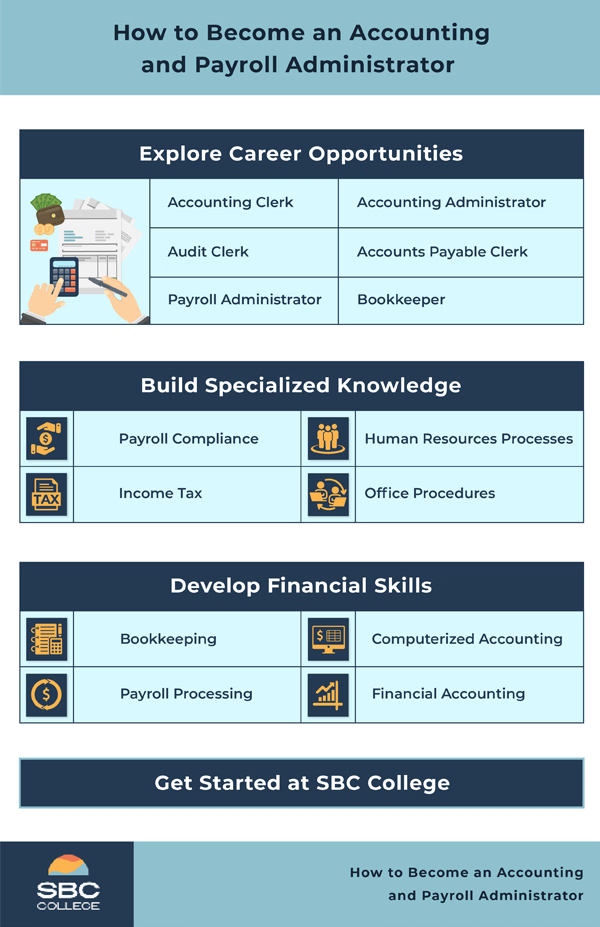
Accounting and payroll administration includes many different roles, such as:
- Accounting Clerk
- Audit Clerk
- Payroll Administrator
- Accounting Administrator
- Accounts Payable Clerk
- Bookkeeper
Alongside being in-demand, these careers suit detail-oriented people who enjoy logic, reasoning, and organizing information.
What Do Accounting and Payroll Administrators Need to Know?

Accounting and payroll administrators need specialized knowledge to handle financial records and employee payments. The same knowledge helps them keep up with legal considerations regarding compensation, taxation, and reporting.
“Key areas of knowledge for accounting and payroll administrators include accounting fundamentals, payroll processing, tax regulations, and compliance requirements. A strong understanding of financial reporting and recordkeeping is also important.”
– Larry G, Accounting and Payroll Administration Instructor, SBC College
Understanding Accounting and Payroll Compliance
Accounting and payroll administrators help their organization follow federal and provincial payroll legislation. They need to understand employer responsibilities as well as the consequences of non-compliance around:
- The Canada Pension Plan (CPP)
- Employment Insurance (EI)
- Taxation
- Employment standards
These rules affect how employers calculate pay, make deductions, and submit required payments.
Personal Income Tax Basics
Personal tax knowledge helps accounting and payroll administrators prepare accurate tax slips and payroll records. They need to know statutory deductions, taxable income, and the Canadian tax system. Knowing how to prepare personal tax returns also helps them develop a better understanding of personal finances.
The Role of Human Resources
Accounting and payroll administrators work with human resources professionals to manage compensation and benefits. It’s important that they understand the processes, procedures, and trends involved. These include:
- Recruitment
- Performance analysis
- Environment and safety practices
- Contemporary issues such as hybrid and contract work
This collaboration is much smoother when the administrator understands how their HR team operates.
Effective Office Procedures
Payroll runs on deadlines, and missing one affects every employee. Strong office procedures keep records organized and tasks on schedule. Accounting and payroll administrators understand how to apply these processes and workflows. This includes knowing how to spot and fix errors and other issues.
Essential Accounting and Payroll Administrator Skills
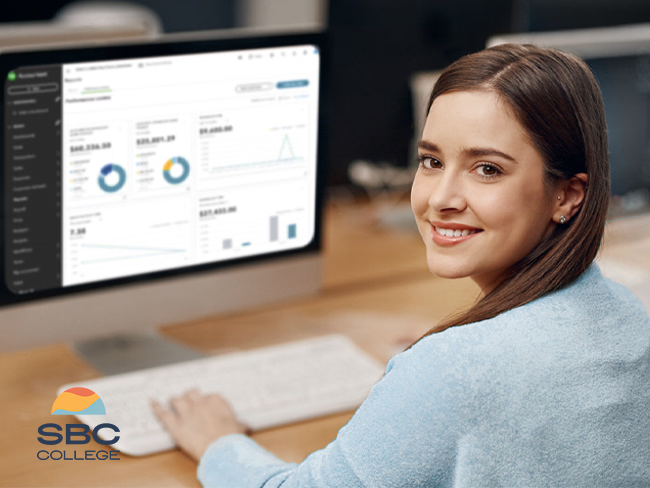
Accounting and payroll administrators combine technical, analytical, and communication skills in their daily work. They apply their knowledge of payroll and recordkeeping while communicating throughout the organization.
“Successful accounting and payroll administrators need strong attention to detail, organizational skills, accuracy, and a solid understanding of accounting software such as QuickBooks and Sage 50. These skills help ensure employees are paid correctly, financial records remain accurate, and businesses meet their reporting obligations.”
– Larry G, Accounting and Payroll Administration Instructor, SBC College
The Fundamentals of Bookkeeping and Financial Accounting
Accounting and payroll administrators record, organize, and report financial information. They use journal entries and the general ledger to track an organization’s cash flow. Their bookkeeping skills also help organizations budget and control funds through:
- Managing accounts receivable and accounts payable
- Tracking inventory and cost of goods sold
- Valuing fixed and intangible assets
- Managing cash flow
Using Accounting Software
Accounting and payroll administrators work extensively in specialized software to complete their work. The software supports them in recording transactions, calculating payroll, and providing reports.
These systems include:
- Sage 50 for bookkeeping, reporting, and budgeting
- QuickBooks for processing sales, recording transactions, and analyzing financial information
- Microsoft Excel for organizing and analyzing information
- Microsoft Word for creating and sharing business reports
Accurate Payroll Processing
Payroll is one of the areas where accuracy matters most. Accounting and payroll administrators calculate regular and non-regular employment as well as bonus, incentive, and termination payments. They also prepare documentation for both stakeholders and the CRA.
Regular government remittances and reporting are also part of their work.
Effective Business Communication
Accounting and payroll administrators should be able to explain remuneration policies, deductions, and procedures. They also share information with employees, managers, and other departments.
For instance, an employee might need an explanation of a deduction on their pay statement. The administrator must explain the information clearly and professionally.
Strong communication also helps administrators coordinate tasks with teams such as human resources and sales.
Start Your Accounting and Payroll Administration Career with SBC College
SBC College’s Accounting and Payroll Administrator diploma program prepares you for a new career in accounting and payroll.
Over the 47-week program, you will build skills in:
- Bookkeeping and Financial Accounting
- Computerized Accounting
- Income Tax Essentials
- Business Law
- Payroll Fundamentals
- Human Resource Fundamentals
- Spreadsheet Fundamentals
- Business Communication and Ethics
- And more
Students will be taught by industry-experienced instructors who bring workplace insights into the classroom. The program offers hands-on training in industry-standard accounting software such as Sage 50 and QuickBooks.
SBC College’s Career Services team also supports your job search, interview prep and resumes even after graduation.
Frequently Asked Questions About Accounting and Payroll Administration
How important is math for an Accounting and Payroll Administrator?
While basic math skills are useful, accuracy and logical thinking matter just as much. Administrators need to calculate payments, check records, and apply payroll rules correctly.
Tools such as Excel and Sage 50 provide support with calculations and financial reporting. Accounting and Payroll Administrators need to understand the numbers and how the policies have been applied.
What’s the difference between a bookkeeper and a payroll administrator?
Bookkeepers maintain an organization’s financial data. This includes documenting transactions, checking records for accuracy, and keeping information organized. The work they do helps businesses better understand their financial health and make more informed decisions.
Payroll administrators focus on employee payments and related records. They calculate wages and deductions, prepare payroll documents, and help meet reporting requirements. Some workplaces combine both sets of responsibilities in one role.
Where do Accounting and Payroll Administrators work?
Every organization that receives or makes payments or pays employees has someone handling accounting and payroll.
Many employers need staff to maintain financial records and process payroll. Possible workplaces include private companies, public organizations, not-for-profits, and service providers.
What are the benefits of an Accounting and Payroll Administrator diploma?
The benefits of earning an Accounting and Payroll Administrator diploma through SBC College include:
- Lifetime access to career services
- Practical skills in bookkeeping, payroll, and financial accounting
- Hands-on experience in software including Microsoft Office, Sage 50, and QuickBooks
- Knowledge of Canadian income tax systems and payroll information systems
How long does it take to become an Accounting and Payroll Administrator?
SBC College’s Accounting and Payroll Administrator diploma program takes just 47 weeks to complete. You will be prepared for careers like accounting administrator, payroll administrator, and bookkeeper in under a year.
How do I find work as an Accounting and Payroll Administrator?
Start by building the accounting and payroll knowledge and skills employers need. A relevant diploma that includes practical hands-on training helps you prepare for entry-level roles.
SBC College’s program also includes ongoing support from Career Services with:
- Resume writing
- Interview preparation
- Job search guidance