


Table of Contents
For many students, having extra support in the classroom makes a big difference in their learning and development.
Education Assistants work with students who need additional academic, behavioural, or personal support. They can provide one-on-one assistance, support small groups, and work with teachers to meet individual student needs.
Their job title also varies by province or employer. You may see titles such as Teacher Assistants, Classroom Assistants, Learning Support Assistants, or Special Needs Assistants.
As you consider this career, you will likely want to know what Education Assistants do, what skills they need, and what training employers look for. Here’s what you should know about the role and how SBC College prepares you to enter the field.
Steps to Become an Education Assistant
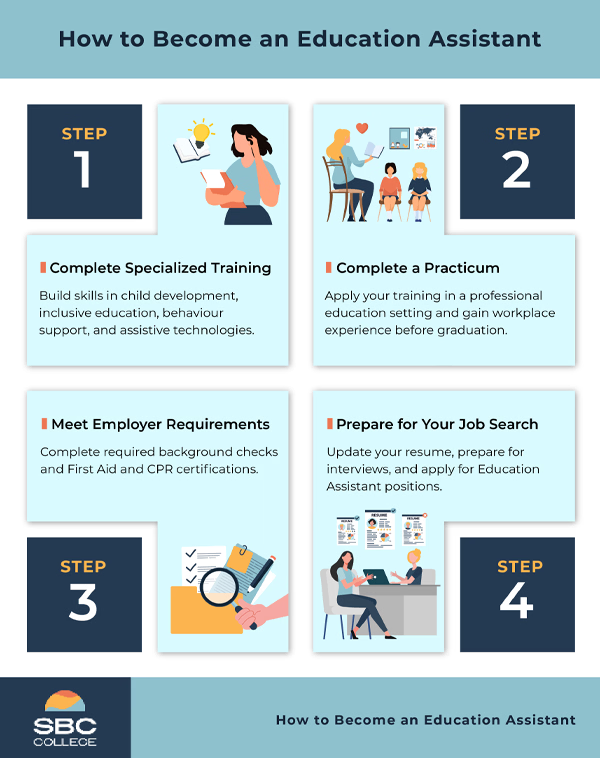
Becoming an Education Assistant involves specialized training, practical experience, and meeting the requirements for employment. Here’s how to get started:
- Enrol in an Education Assistant Program
Choose a diploma program that covers the knowledge you will use when supporting students. Key courses include:
- Child & Adolescent Development
- Universal Design of Learning
- Autism Spectrum Disorder
- Communication & Language Development
- Supporting Personal Care
- Provincial Outreach for Autism & Related Disorders
- Inclusion
- Child & Adolescent Psychology
- Assistive Technologies
- Fostering Positive Behaviour
- Exceptional Learners
- Fetal Alcohol Spectrum Disorder
- Workplace Safety & First Aid Positive behaviour support
SBC College’s 47-week Education Assistant diploma program covers the specialized knowledge and skills needed to understand how students learn, communicate, behave, and respond to different forms of support.
“When you’re working with students, you will see how their needs can vary. For example, a student with Autism might learn, communicate, or respond differently from a student with Fetal Alcohol Spectrum Disorder (FASD).
Students with the same exceptionality may need different support, at different times or in different situations. Understanding these differences helps you adapt how you assist each student without taking away from their independence.”
– Valerie T., Assistant Education Manager, SBC College - Get Real-World Exposure
Classroom training gives you the foundation for the role. A practicum gives you the opportunity to apply that knowledge in a professional education setting.
During your practicum, you will work with students and education professionals while gaining experience with the situations Education Assistants handle in their work.
You will also receive guidance from an experienced supervisor and begin building professional connections in the field.
“For many of our students, a practicum is their first chance to experience the Education Assistant role in a real-world setting. Over nine weeks, they could be placed in a school, after-school program, or special education program.
They get to support students, work with education professionals, and experience the everyday situations that come with the role. It’s where they get to put what they’ve learned into practice.”
– Valerie T., Assistant Education Manager, SBC College - Meet Employment Requirements
Before working with students, you need to meet the screening and certification requirements. These requirements vary by province, school board, and employer, and could include:
- Criminal Record Check
- Vulnerable Sector Check
- First Aid Level C
- CPR certification
Check the requirements for the positions you plan to apply for and make sure you have the necessary documentation and certifications. When choosing a diploma program, check whether this training is included.
- Prepare for Your Job Search
When comparing diploma programs, look for one that includes Career Services that assist with resumes, interview preparation, and job search. Access to this support can make the transition from training to employment easier.
Education Assistant Program Admission Requirements
Admission requirements vary by college. At SBC College, you don’t need previous experience to apply to the Education Assistant diploma program.
Applicants must:
- Have a high school diploma or equivalent, or qualify through mature student admission
- Meet SBC College’s English language proficiency
Do You Need a Criminal Record Check / Vulnerable Sector Check?
Criminal Record Checks and Vulnerable Sector Checks are generally required for both Education Assistant practicum placements and employment.
These checks are part of the screening process for roles that involve working with children and other vulnerable populations.
However, specific requirements vary by school division, practicum site, province, and employer.
Skills You’ll Need as an Education Assistant

Education Assistants need practical skills that relate directly to the students they support and the environments where they work.
- Knowledge of Child Development: Understanding child development helps you recognize how children’s cognitive, emotional, social, and physical needs change as they grow.
- Inclusive Learning Support: Education Assistants help students participate in learning activities. This includes adapting and using inclusive strategies to support students with different abilities and learning needs.
- Positive Behaviour Support: Education Assistants observe student behaviour and use appropriate strategies to encourage participation and positive classroom behaviour.
- Supporting Students with Exceptionalities: Students with Autism Spectrum Disorder (ASD), Fetal Alcohol Spectrum Disorder (FASD), disabilities, and other exceptionalities require different forms of support. Education Assistants need to understand these differences and adjust their approach to the individual student.
- Assistive Technology Skills: Education Assistants use assistive tools and technologies to support student communication, learning, participation, and independence.
- Personal Care Skills: Some students require assistance with mobility, positioning, or other personal care needs. Education Assistants need the knowledge and skills to provide this support safely.
- Communication Skills: Education Assistants communicate with students, teachers, families, and other members of the educational team. Clear communication helps everyone stay informed about a student’s needs and progress.
These skills allow Education Assistants to provide individualized support and create an inclusive learning environment.
Education Assistant Job Outlook & Salary
Demand for Education Assistants remains strong across Canada as schools continue to require trained staff to support diverse learners and inclusive classrooms.
Growing student enrolment and a greater focus on inclusive education are creating opportunities for skilled Education Assistants. Retirements among experienced workers also contribute to new openings.
Education Assistants earn up to $50,668 per year, depending on their experience, location, employer, and role.
Where Education Assistants Work
Education Assistants find opportunities in a variety of environments that support children and youth.
Common work environments include:
- Elementary and secondary schools: Support students individually, in small groups, or during classroom activities.
- Special education programs: Work with students with disabilities, learning differences, or additional needs.
Where an Education Assistant works can influence what their day looks like and the responsibilities they take on. Some positions involve more one-on-one assistance, while others involve working with small groups or assisting throughout the classroom. The role can also change based on students’ ages, abilities, and individual needs.
Why Choose SBC College’s Education Assistant Diploma
SBC College’s Education Assistant diploma program prepares you to support students with diverse learning, behavioural, communication, and personal care needs.
Over 47 weeks, you’ll study child development, inclusive education, universal design of learning, assistive technologies, support for exceptional learners, and more. Our program provides the foundation for supporting students with different needs.
Here is what you can expect from our Education Assistant program:
- Learn from industry-experienced instructors: Your instructors bring experience from the education field into the classroom. Their practical knowledge helps connect course concepts to situations you may face when supporting students.
- Put your training into practice: The 9-week practicum gives you experience in an education setting before graduation. You will work with students and education professionals while applying what you learned throughout the program.
- Online learning: Live classes and recorded lectures help you to balance your studies, work, and family.
- Support throughout your studies: The program includes live onboarding to help you get familiar with the online learning environment. The Academic Prep course develops skills in planning, time management, writing, problem-solving, and technology. You’ll also have access to instructors, Student Services, and 24/7 mental health counselling if you need assistance.
- Lifetime Career Services: SBC College’s Career Services provides support with your resume, interview preparation – including job search, even after you graduate.
FAQs
What does an Education Assistant do?
An Education Assistant supports students with academic, behavioural, communication, and personal care needs. They provide one-on-one assistance, support small groups, adapt learning activities, and assist with positive behaviour support strategies. Education Assistants also work with teachers and other education professionals to meet individual student needs.
What’s the difference between an Education Assistant, Teacher Assistant, and Teacher’s Aide?
Education Assistant, Teacher Assistant, and Teacher’s Aide generally refer to the same role. The title varies by province, school board, or employer, but the purpose remains the same: supporting students with their learning and development needs.
What is the difference between an Education Assistant and an Early Childhood Educator?
Education Assistants support K–12 students, often with specialized learning, behavioural, developmental, physical, or personal care needs. Early Childhood Educators work mainly with younger children in daycare, preschool, and other early-learning settings.
How long does it take to become an Education Assistant?
Education Assistant training can take less than a year depending on the program you choose. SBC College’s Education Assistant diploma takes 47 weeks and includes a 9-week practicum opportunity.
Is an Education Assistant certificate or diploma better?
Education Assistant certificate and diploma differ in length and course coverage. A diploma covers training in various areas such as child development, inclusive education, behaviour support, exceptionalities, and assistive technologies.
The most comprehensive diploma programs also include practical learning and a practicum opportunity. SBC College’s Education Assistant diploma programs includes a 9-week practicum in an educational setting.
Certificate programs are shorter and may not include a practicum.
Do Education Assistants need a criminal record check?
Yes, Criminal Record Checks and Vulnerable Sector Checks are generally required for Education Assistant practicum placements and employment. Requirements can vary by province, school division, practicum site, or employer. Additional screening may also be required.
Do you need a degree to be an Education Assistant?
No, you do not need a university degree to become an Education Assistant. However, employers require and prefer an Education Assistant diploma. Requirements vary by province, school board, and employer.